China ends paper gold trading: what it means for gold prices and traders in 2026 is an important development that could have implications for the global gold market, particularly for Chinese retail investors, physical gold demand, and the growing influence of Asian markets on gold price discovery. China’s move to withdraw retail investors from certain leveraged precious-metals trading products does not mean that gold ownership has been banned.
Instead, it represents a shift away from speculative paper-gold trading toward tighter risk controls, while potentially increasing attention on physical gold and the long-term structure of the global gold market.
On July 24, 2026, several major Chinese banks, led by ICBC, ended or suspended retail access to leveraged precious-metals trading products linked to the Shanghai Gold Exchange. The change primarily affects retail leveraged/paper-gold products, not physical gold ownership or the entire Chinese gold market.
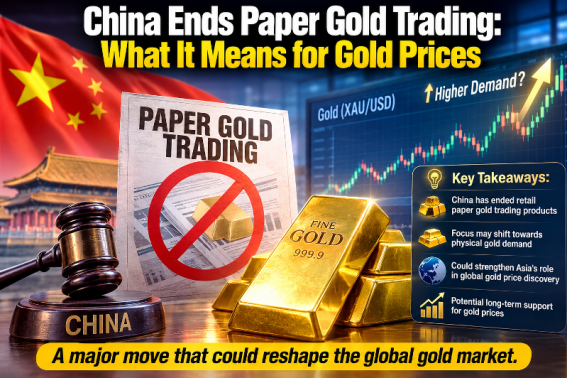
China Ends Paper Gold Trading: What It Means for Gold Prices
- What exactly has China ended?
The headline “China bans paper gold” is somewhat misleading.
Chinese banks are withdrawing retail customers from certain leveraged precious-metals products connected to the Shanghai Gold Exchange. Investors who previously used these products to speculate on gold prices without taking physical delivery have been required to close or settle positions.
Physical gold buying has not been banned.
This distinction is critical because the move changes the way Chinese retail investors can gain exposure to gold rather than eliminating Chinese demand for gold altogether.
- Why did Chinese banks do this?
The immediate explanation is risk control.
Gold experienced extreme volatility after reaching record levels earlier in 2026. Chinese banks subsequently tightened their precious-metals risk controls and increased margin requirements on some products.
Therefore, one interpretation is that Chinese authorities and banks are trying to reduce excessive retail speculation and leveraged exposure.
In simple terms:
China is making it harder for ordinary investors to speculate on gold with leverage.
That could reduce short-term speculative trading and potentially make China’s retail gold market less volatile.
Potentially, but indirectly.
There are several competing effects.
Bullish factor: greater focus on physical gold
If some investors who previously traded paper/leveraged gold decide instead to purchase physical bullion, demand for actual gold could increase.
That matters because physical gold is different from a derivative position.
A leveraged paper-gold position can be opened and closed without requiring additional physical metal. A physical purchase, however, requires actual bullion to be supplied.
So if China’s enormous gold-investment market increasingly shifts toward physical ownership, it could provide structural support for physical gold demand.
However, we should not assume that every investor exiting paper gold will automatically buy physical gold.
Some will simply leave the market.
- The bigger story may be China’s influence over gold price discovery
This is arguably more significant than the immediate effect on XAU/USD.
China has been developing its own gold-market infrastructure, while Hong Kong is being positioned as an increasingly important international gold hub.
Reuters reported that China launched Delivery Connect, linking Hong Kong with the Shanghai Gold Exchange for physical gold delivery, while China is also expanding gold-vault capacity in Hong Kong. The broader strategy could increase the role of yuan-denominated and Asian gold markets in global price discovery.
That creates an interesting long-term development:
London/COMEX → Western financial price discovery
versus
Shanghai/Hong Kong → increasingly physical, Asia-centered price discovery
It would be premature to say China has displaced London or COMEX. Those markets remain vastly important. But China’s infrastructure development could gradually increase Asia’s influence over global gold pricing.
For forex and CFD traders watching XAU/USD, China’s decision should be treated as a medium- to long-term fundamental factor, rather than a standalone buy signal.
Gold prices will continue to respond strongly to:
- Federal Reserve interest-rate expectations
- US Treasury yields
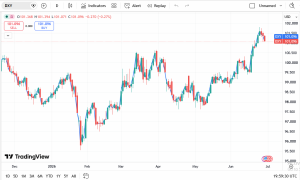
- US dollar strength
- Central-bank gold purchases
- Geopolitical risk
- Inflation expectations
- Global investment demand
- ETF flows
- Physical demand from China and India
- Futures positioning and liquidity
For example, Chinese banks began reducing retail precious-metal trading while gold was experiencing a major correction, demonstrating that the policy move itself does not necessarily determine the direction of gold prices.
For traders, the key distinction is:
China ending retail paper-gold trading ≠ guaranteed gold price increase.
Instead:
China ending leveraged retail trading + continued physical demand + increasing Asian gold infrastructure = potentially bullish long-term structural signal.
- Could gold develop a stronger Chinese/Asian premium?
Yes, this is something worth monitoring.
If Chinese physical demand becomes significantly stronger while available physical supply becomes tighter, Chinese or Asian gold prices could trade at a premium relative to Western benchmarks.
That creates an important market signal.
If:
Shanghai physical gold price > international benchmark
for a sustained period, it could indicate stronger regional physical demand.
But arbitrage mechanisms tend to bring prices back together when cross-border movement is possible, so a persistent large premium would require meaningful differences in supply, demand, capital flows, or market access.
- The most important long-term implication
The biggest story may not be “China is going to make gold more expensive.”
It may instead be:
China is gradually building a gold market in which physical bullion and Asian price discovery become more important.
That is consistent with the country’s broader efforts to strengthen Hong Kong’s position as an international gold centre. Reuters reports that Asian buyers already account for around 60% of global gold jewellery demand, highlighting the importance of the region to the physical market.
This could become increasingly relevant if China continues accumulating gold while developing infrastructure that allows more international participants to access Shanghai/Hong Kong-based physical markets.
Gold Price Outlook
🟢 Long-term: Moderately bullish
China’s shift away from leveraged retail paper-gold trading could ultimately support a market increasingly focused on physical bullion, particularly if Chinese and Asian physical demand remains strong.
🟡 Short-term: Neutral to volatile
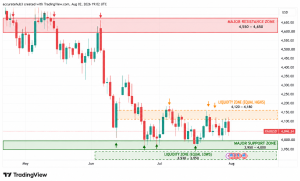
The policy itself doesn’t guarantee higher XAU/USD prices. Traders should still prioritize the dollar, Treasury yields, Fed policy and technical market structure.
🔴 Bearish scenario
Gold could still decline if:
- the US dollar strengthens substantially;
- Treasury yields rise;
- expectations for Fed easing weaken;
- global investment demand falls;
- Chinese physical demand disappoints.
🟢 Bullish scenario
Gold could strengthen if:
- Chinese physical demand remains strong;
- central banks continue accumulating bullion;
- Asian gold premiums increase;
- the dollar weakens;
- real yields decline;
- geopolitical uncertainty increases.
The Bottom Line
China’s end to retail paper-gold trading is more significant as a structural market development than as an immediate price catalyst.
It doesn’t mean China has banned gold, nor does it mean millions of Chinese investors must suddenly buy physical bullion. The immediate policy motivation appears strongly connected to risk management and reducing leveraged retail speculation.
But over the longer term, China’s growing emphasis on physical gold, Shanghai-based trading infrastructure and Hong Kong’s international role could increase Asia’s influence over global gold price discovery.
For XAU/USD traders, therefore, I would classify the development as structurally bullish but not an immediate buy signal.