Why Petrol and Diesel Prices Could Fall Next Month as Crude Oil Trades Near $69
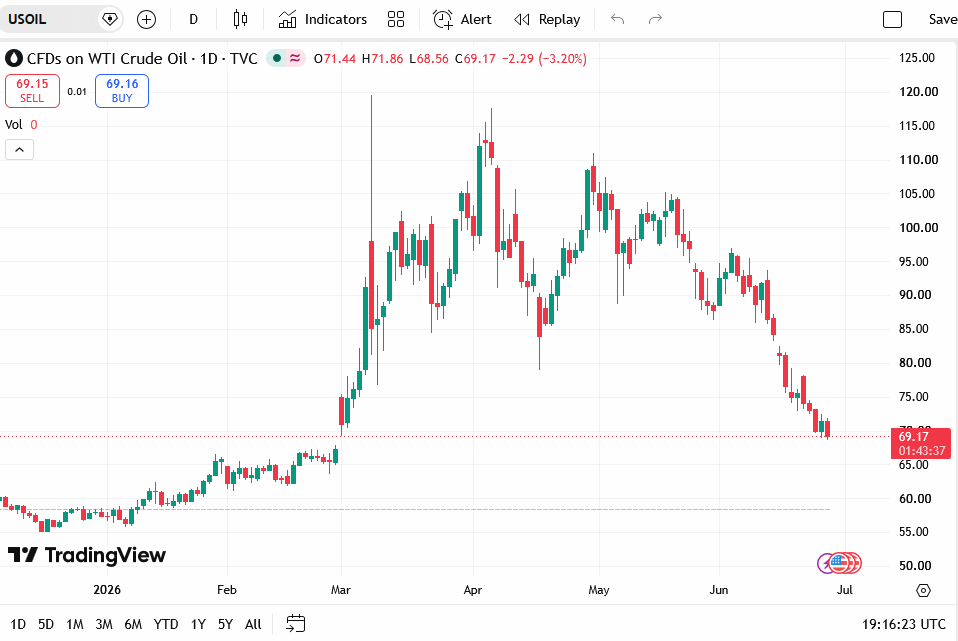
Global crude oil prices have retreated sharply over the past few weeks, with West Texas Intermediate (WTI) crude currently trading around $69 per barrel after previously surging above $110 per barrel. This significant decline has sparked expectations that petrol and diesel prices may begin to ease during the next pricing cycle.
Although retail fuel prices do not always move in perfect sync with crude oil, the recent drop in oil prices provides a strong fundamental basis for lower fuel costs if current market conditions remain unchanged.
Crude Oil Has Lost Its Geopolitical Premium
One of the biggest drivers behind the earlier rally in crude oil prices was geopolitical uncertainty. Escalating tensions in the Middle East created fears that oil exports could be disrupted, particularly through the Strait of Hormuz—a strategic shipping route responsible for transporting a substantial portion of the world’s crude oil.
During periods of heightened geopolitical risk, traders typically add a “risk premium” to oil prices. This extra premium reflects the possibility that supplies could suddenly become unavailable.
However, as diplomatic efforts reduced tensions and shipping activities gradually normalized, fears of prolonged supply disruptions eased. As a result, investors began selling oil contracts, causing crude prices to retreat rapidly toward the $69 level.
In simple terms, the market is no longer paying the high insurance premium that existed during the peak of geopolitical uncertainty.
Global Oil Supply Remains Comfortable
Supply fundamentals have also contributed to the decline in oil prices.
Major oil-producing countries continue to maintain healthy production levels, while output from non-OPEC producers remains resilient. With sufficient crude oil available to meet current demand, fears of a supply shortage have diminished considerably.
The market is now focusing less on supply disruptions and more on whether global demand can absorb existing production levels.
When supply exceeds or comfortably meets demand, prices naturally come under downward pressure.
Slower Global Economic Growth Is Limiting Demand
Demand remains another important factor influencing oil prices.
Several international energy agencies have revised their forecasts for global oil demand growth. Slower economic expansion in many major economies has reduced industrial activity, transportation demand, and overall fuel consumption.
Manufacturing sectors in several regions continue to experience slower growth, while consumers are becoming more cautious with spending due to persistent inflation and higher borrowing costs.
Since crude oil demand is closely tied to economic activity, slower global growth generally translates into weaker demand for petroleum products.
Lower demand combined with stable supply creates an environment that favors lower crude oil prices.
Technical Analysis Supports the Bearish Outlook
From a technical perspective, the weekly WTI crude oil chart also supports the recent decline.
After rallying above $110, sellers regained control and pushed prices steadily lower over several weeks. The market has now returned to an important support zone around $68–70 per barrel.
Momentum indicators such as the Relative Strength Index (RSI) have also weakened, suggesting that bullish momentum has faded considerably.
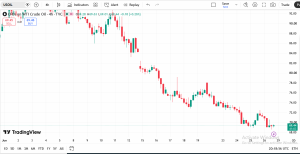
If this major support fails to hold, the next downside targets could emerge around $65–67 per barrel, although any fresh geopolitical developments could quickly change market sentiment.
For now, however, the overall technical structure favors cautious bearish momentum unless buyers successfully defend current support levels.
What This Means for Petrol and Diesel Prices
Since crude oil is the primary raw material used in producing petrol and diesel, falling crude prices generally reduce refining costs over time.
Refineries purchase crude oil, process it into refined petroleum products, and then distribute those products through wholesalers and retailers.
When crude becomes cheaper, refiners eventually experience lower input costs. Those savings can gradually flow through the supply chain, resulting in lower pump prices for consumers.
However, this process is rarely immediate.
Fuel prices typically respond with a delay because crude purchased weeks earlier may still be working its way through refineries and distribution networks.
Therefore, if crude oil continues trading around current levels over the coming weeks, there is a reasonable possibility that consumers could begin seeing lower petrol and diesel prices during the next pricing cycle.
Why Nigeria May Experience a Different Outcome
While falling crude prices generally support lower fuel prices globally, Nigeria’s domestic market depends on several additional factors.
These include:
- Exchange rate movements between the Naira and the US dollar.
- Landing costs of imported petroleum products.
- Operational costs for domestic refineries.
- Transportation and logistics expenses.
- Government policy and market competition.
- Pricing decisions by marketers and refiners.
Even if international crude prices continue falling, a weaker naira could offset much of the potential savings.
Conversely, if the naira remains relatively stable while crude prices stay below $70, Nigerian consumers could benefit from lower pump prices over the coming weeks.
Risks That Could Push Oil Prices Higher Again
Although the current outlook appears favorable for lower fuel prices, several risks could quickly reverse the trend.
A renewed escalation of conflict in the Middle East could once again threaten global oil supplies and reintroduce a geopolitical risk premium into the market.
Likewise, if OPEC+ announces deeper production cuts, global supply could tighten, placing upward pressure on prices.
Unexpected economic recovery in major consuming countries such as China, India, or the United States could also strengthen oil demand and lift crude prices.
Natural disasters affecting major oil-producing regions or refinery operations could produce similar effects.
Because the oil market reacts rapidly to both geopolitical and economic developments, traders should continue monitoring global news closely.
Final Thoughts
The recent decline in WTI crude oil to approximately $69 per barrel represents a significant shift from the elevated prices witnessed during the recent geopolitical tensions. The easing of supply concerns, stable production levels, and slower global demand growth have combined to create a fundamentally bearish environment for crude oil.
If these conditions persist, petrol and diesel prices have a strong economic basis to decline during the next pricing cycle. However, consumers—particularly in Nigeria—should recognize that international crude prices are only one part of the pricing equation. Currency movements, refining costs, distribution expenses, and domestic market dynamics will ultimately determine how much of the crude oil price decline is reflected at the fuel pump.
For traders and investors, the coming weeks will be crucial. A sustained move below the $68–$70 support zone could signal additional downside for crude oil, while any unexpected geopolitical shock could quickly reverse sentiment. Monitoring both technical price action and global fundamentals will remain essential for anticipating the next major move in the energy market.